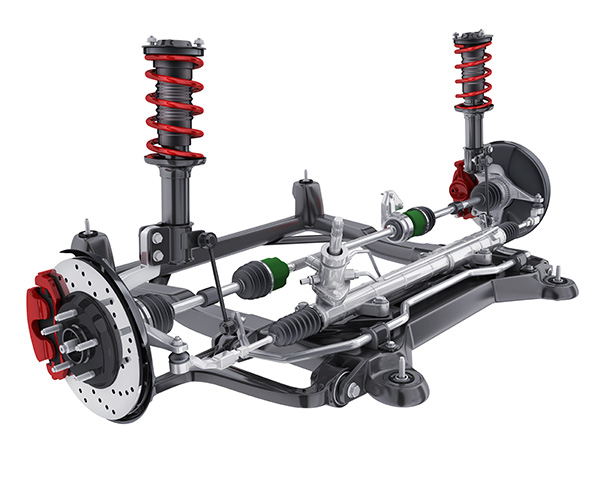
A sway bar helps control how much a vehicle’s body leans during turns. It connects the left and right sides of the suspension so they can resist excessive movement in opposite directions. When the vehicle corners, the outside suspension compresses while the inside suspension extends. The sway bar twists and transfers part of that force across the axle.
This added resistance helps the vehicle feel more stable and predictable without preventing each wheel from moving over ordinary bumps. The component is also called an anti-roll bar or stabilizer bar. It does not support the vehicle’s full weight, but it plays an important role in steering response, cornering balance, and emergency handling.
How a Sway Bar Controls Body Roll
During a turn, the vehicle’s weight shifts toward the outside wheels. Without enough resistance, the body can lean heavily, changing tire loading and making the steering feel delayed or unsettled.
The sway bar is a steel bar mounted across the front or rear suspension. Its center section attaches to the frame or subframe through rubber bushings, while its ends connect to the suspension through links. As one wheel moves upward and the other moves downward, the bar twists along its length.
That twisting action resists the difference in movement between the two sides. The bar does not completely stop body roll. A certain amount of movement is necessary for ride comfort and tire contact. Its purpose is to keep that movement within the range intended by the vehicle manufacturer.
Front and Rear Sway Bars Affect Handling Differently
Many vehicles use a front sway bar, while others have both front and rear bars. The size and stiffness of each bar influence how the vehicle responds during cornering.
A stronger front bar generally reduces front body roll but can increase the tendency for the front tires to lose grip first during a hard turn. A stronger rear bar can help the vehicle rotate more readily, but excessive rear stiffness may make the rear tires lose grip sooner.
Manufacturers balance the front and rear suspension to provide predictable handling for the vehicle’s weight, tire size, drivetrain, and intended use. Replacing a bar with a different design changes that balance. Performance upgrades should be selected as part of a complete suspension plan rather than by bar diameter alone.
What Sway Bar Links Do
Sway bar links connect the ends of the bar to the control arms, struts, or other suspension components. Depending on the design, a link may use ball-and-socket joints, rubber bushings, metal sleeves, or a combination of these parts.
The links move constantly as the suspension travels. Their joints can wear, protective boots can split, and bushings can deteriorate. A loose link may no longer transfer force effectively between the suspension and sway bar.
Common signs of worn links include:
- Clunking over small bumps
- Rattling on rough roads
- Noise when entering driveways
- Loose or unstable cornering
- Visible movement in a link joint
- Torn link boots or damaged bushings
Noise from a sway bar link can resemble a worn strut mount, control arm bushing, ball joint, or steering component. Testing the suspension is necessary before replacement parts are selected.
Why Sway Bar Bushings Wear Out
The center of the sway bar passes through rubber or synthetic bushings attached to brackets. These bushings hold the bar in position while allowing it to twist.
Heat, road contamination, age, and repeated movement can harden or wear the bushings. The bar may begin shifting inside the mounts, creating a dull knock or squeak. Oil and other automotive fluids can also damage certain rubber materials.
Bushings must fit the bar correctly. Installing the wrong inside diameter can leave the bar loose or prevent normal movement. Some designs require an approved lubricant during installation, while others are intended to operate dry. The correct procedure depends on the bushing material and vehicle design.
What Happens if the Sway Bar Fails?
A broken sway bar or disconnected link does not usually cause the wheel to separate from the vehicle. The suspension can still support the car, but cornering behavior may change noticeably.
The body may lean more during turns, lane changes, or highway ramps. Steering response can feel slower, and the vehicle may take longer to settle after a quick maneuver. The change is often more noticeable in SUVs, vans, and other vehicles with a higher center of gravity.
A broken component can also move out of position and contact a tire, axle, brake hose, CV boot, or other nearby part. Severe noise, visible damage, or a bar hanging beneath the vehicle requires prompt attention.
Can a Bad Sway Bar Cause Uneven Tire Wear?
A worn sway bar link or bushing does not usually directly alter wheel alignment. Tire wear is more commonly connected to incorrect alignment angles, weak shocks or struts, worn control arm bushings, damaged springs, or improper tire pressure.
However, reduced roll control can change how weight transfers across the tires during turns. If the vehicle also has other suspension wear, the combined effect can contribute to poor handling and irregular tire loading.
An inspection should cover the complete suspension rather than focusing only on the noisy component. Technicians may check links, bushings, bar mounts, struts, shocks, control arms, ball joints, tie rods, springs, and tire condition.
When Sway Bar Service Is Needed
Sway bars themselves are durable and do not have a routine replacement interval. Links and bushings wear more frequently because they contain moving joints and flexible materials.
Regular maintenance visits provide an opportunity to identify split boots, loose links, deteriorated bushings, damaged brackets, and corrosion before handling becomes noticeably affected. Repairs should restore the original mounting position and use parts suited to the vehicle’s suspension package.
After installation, fasteners must be tightened according to the required procedure. Some bushing-style links should be torqued at normal ride height to prevent the rubber from being twisted at rest.
Get Sway Bar Service In Kearny, NJ, With Autobahn Auto Repair
Autobahn Auto Repair in Kearny, NJ, can evaluate sway bars, links, bushings, shocks, struts, control arms, steering parts, and tire wear.
Contact us to schedule service if your vehicle clunks over bumps, leans excessively in turns, or feels less stable during lane changes.
