An oil leak can look like a small nuisance at first. You see a few spots on the driveway, smell something hot after parking, or notice oil collecting under the engine. Since the car still runs, it is easy to think the leak is only making a mess.
Some oil leaks are minor for a while, but none should be ignored. Engine oil protects moving parts, helps control heat, and reduces internal wear. When oil leaks, the engine can lose protection, nearby parts can be damaged, and the repair can cost more than the original leak.
Engine Oil Leaks Can Lower Oil Level
The biggest concern with an oil leak is the oil level dropping too far. The engine needs enough oil to protect bearings, camshafts, timing parts, pistons, and other moving surfaces. If the level gets low, those parts can wear faster because they are not getting the protection they need.
A small leak may not lower the level overnight, but it can add up over days or weeks. Some drivers do not notice until the oil pressure warning light comes on, and by then, the engine may already be at risk. Checking the dipstick can help, but finding and repairing the leak is the real fix.
Burning Oil Smell From Oil Leaking On Hot Parts
Oil leaks can create a burning smell when oil drips onto hot engine or exhaust parts. You may smell it after a drive, while sitting at a light, or when the vents pull the odor into the cabin. The smell can be faint at first, then becomes stronger as the leak spreads.
Burning oil is more than unpleasant. Oil on hot surfaces can smoke, collect dirt, damage rubber parts, and make the engine bay harder to inspect. In some cases, oil near hot exhaust components can become a safety concern. Any repeated burning oil smell should be checked.
Common Engine Oil Leak Locations
Engine oil can leak from many places. Valve cover gaskets, oil pan gaskets, drain plugs, oil filter housings, timing covers, crankshaft seals, camshaft seals, and oil cooler seals are all common sources. The exact location depends on the vehicle design and engine layout.
Finding the source is not always as simple as looking where the oil lands. Oil can run down the engine, blow backward while driving, and collect far away from the actual leak. A proper inspection may include cleaning the area, adding dye, checking from underneath, and watching where fresh oil appears.
Oil Leaks Can Damage Belts, Hoses, And Mounts
Oil does not stay neatly in one place once it starts leaking. It can spread onto belts, coolant hoses, engine mounts, wiring, and plastic covers. Rubber parts can soften or swell when oil sits on them for too long. Belts can slip or wear faster if they become contaminated.
That is how a simple gasket leak can turn into several repairs. A leaking valve cover gasket, for example, may drip onto ignition coils, spark plug wells, hoses, or exhaust parts. Regular maintenance helps catch leaks while they are still confined to one area, rather than spreading across the engine bay.
Oil Spots Under The Car Should Not Be Ignored
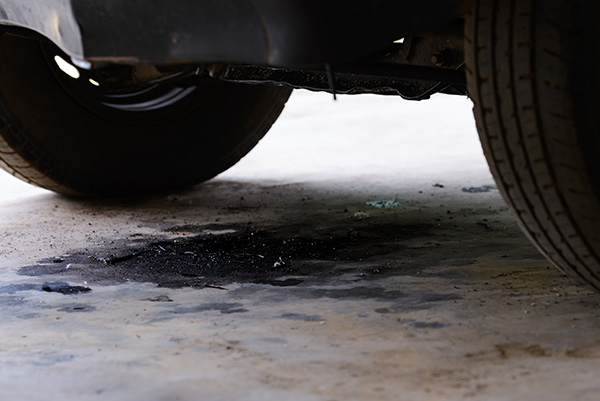
Oil spots on the driveway or garage floor are useful clues. Fresh engine oil is usually amber to brown, while older oil may look dark. If the spot keeps returning in the same place, the leak is active. Even if the spot is small, it tells you oil is leaving the engine.
Keep in mind that not every dark fluid under a car is engine oil. Transmission fluid, power steering fluid, gear oil, or even dirty coolant can be mistaken for oil. The fluid color, smell, thickness, and location can help narrow it down, but the vehicle should be checked before assuming the source.
When An Oil Leak Becomes More Serious
Some signs make an oil leak more urgent. A low oil level, oil pressure warning light, smoke, burning smell, engine ticking, worsening leak size, or oil dripping near the exhaust should be taken seriously. The same goes for oil collecting near belts or wiring.
If the oil warning light comes on, do not keep driving as if it is only a service reminder. That light can indicate the engine has lost oil pressure, which can quickly lead to internal damage. Pulling over safely and checking the situation is much better than hoping the engine can make it a few more miles.
Why Engine Oil Leak Repair Should Start With Testing
Oil leak repair works best when the source is confirmed first. Replacing the most visible gasket may not fix the leak if oil is coming from a higher point on the engine. Some leaks also appear worse than they are because old oil has spread around for months.
A careful check can show whether the issue is a loose drain plug, a worn gasket, a cracked seal, a damaged housing, or another engine concern. The goal is to repair the leak that is actually causing the problem and clean enough of the area to verify the result afterward.
Get Engine Oil Leak Repair In Kearny, NJ, With Autobahn Auto Repair
If your vehicle leaves oil spots, smells like burning oil, has a low oil level, or shows signs of leakage under the hood, Autobahn Auto Repair in Kearny, NJ, can find the source and explain the repair clearly.
To test and repair engine oil leaks before the problem spreads, contact us to schedule an appointment.
