A blinking check engine light is not the same as a steady one. A steady light gives you a little more room to schedule service. A blinking light usually means the engine is misfiring right now, and that can damage expensive parts if the vehicle keeps being driven.
Spark plugs and ignition coils are two of the most common causes behind that warning. They are small compared with the engine, but when they stop doing their job, the whole car can start shaking, hesitating, or running rough.
Why A Blinking Check Engine Light Is More Urgent
The check engine light blinks when the vehicle’s computer sees a problem serious enough to require faster attention. In many cases, that problem is an active misfire. A misfire means one or more cylinders are not burning the air-fuel mixture correctly.
That unburned fuel can move into the exhaust and overheat the catalytic converter. Once the converter is damaged, the repair can become much more expensive than replacing worn ignition parts. That is why a blinking light should not be treated like a warning that you can wait weeks for.
What Spark Plugs Do
Spark plugs create the spark that ignites the fuel mixture inside the engine. They fire repeatedly every time the engine runs. After enough miles, the tips wear down, the gap changes, and the spark can weaken or become less consistent.
A worn spark plug can cause rough starts, shaking at idle, hesitation under acceleration, and lower fuel economy. The engine may run fine at light throttle, then stumble when you ask for more power. That uneven firing is exactly the kind of problem that can trigger a blinking check engine light.
What Ignition Coils Do
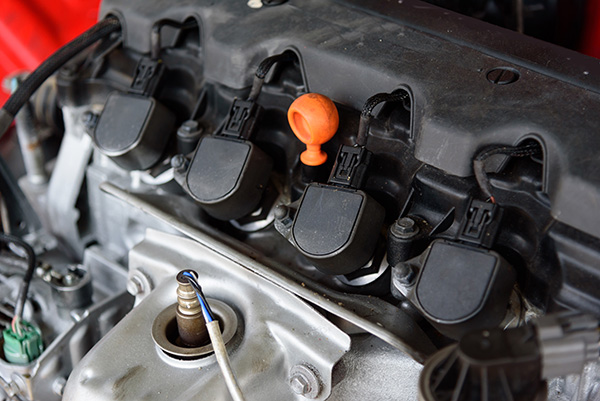
Ignition coils supply the high voltage that the spark plugs need to fire. Without a strong coil, the spark plug cannot ignite the mixture properly. Some vehicles use one coil per cylinder, while others use different coil setups depending on the engine design.
Coils can fail due to heat, age, vibration, oil contamination, or excessive strain from old spark plugs. A weak coil may work when the engine is cool, but act up once it gets hot. That can make the problem feel inconsistent, even though the ignition system is already giving clear signs.
How Bad Plugs And Coils Feel From The Driver’s Seat
Ignition problems can show up in several ways. The engine may shake at stoplights, feel weak while merging, jerk under load, or sound rough during startup. Some drivers also notice a fuel smell or poor mileage before the light starts blinking.
A flashing light with strong shaking is a sign to stop driving as soon as it is safe to do so. If the light blinks only during acceleration and then goes steady, the vehicle still needs attention. Our technicians check stored data, misfire counts, plug condition, coil operation, and related wiring to determine which cylinder is causing the problem and why.
Why Replacing One Part Is Not Always Enough
It is tempting to replace the spark plug or coil named by the code and call it done. Sometimes that works. Other times, the code is only showing where the misfire was detected, not why it happened. Oil leaking into a spark plug tube, a bad injector, low compression, wiring trouble, or a vacuum leak can all create symptoms that look like ignition failure.
That is why a proper inspection matters. If a coil failed because old spark plugs forced it to work too hard, replacing only the coil may leave the same stress in place. If oil has soaked the ignition parts, the leak needs to be repaired as well. The goal is to fix the cause, not only to quiet the warning light for a few days.
Spark Plug Service Helps Prevent Coil Strain
Spark plugs have service intervals for a reason. Waiting too long can make the ignition coils work harder to fire across a worn plug gap. Over time, that added stress can shorten coil life and increase the chance of a misfire.
Regular maintenance helps prevent that chain reaction. The correct plug type, proper installation, and clean ignition areas all matter. A spark plug service may seem basic, but it protects the coils, catalytic converter, fuel economy, and overall engine performance.
What To Do When The Light Starts Blinking
If the check engine light is blinking, ease off the throttle and avoid hard acceleration. If the engine is shaking badly, running rough, or losing power, pull over safely and shut it off. Driving farther can increase the risk of catalytic converter damage.
If the vehicle must be moved, keep it short and gentle. Please do not clear the code before service, as that can erase useful information. The stored data can help one of our technicians see when the misfire happened and which cylinder was involved.
Get Check Engine Light And Ignition Repair In Kearny, NJ, With Autobahn Auto Repair
If your check engine light is blinking or your engine is misfiring, Autobahn Auto Repair in Kearny, NJ, can test the spark plugs, ignition coils, and related systems to find the cause.
Bring it in before a bad spark plug or ignition coil turns into catalytic converter damage or a larger engine repair.
